Survey: The Looming Government Shutdown and the Future of ACA Subsidies, Boldin Subscribers Express Concerns
The possibility of a government shutdown this October has many Americans wondering how it could ripple into their financial lives. For retirees and those planning an early retirement, one of the biggest flashpoints is healthcare. A major sticking point in the budget debate is whether subsidies for Affordable Care Act (ACA) plans will be protected. If they’re reduced or eliminated, the Kaiser Family Foundation estimates that premiums could rise by more than 75% on average — a seismic shift for anyone who isn’t yet eligible for Medicare and funding their own healthcare like many retirees.

How Are Financially Savvy Americans Feeling About a Shutdown?
At Boldin, we asked our community how they’re thinking about a potential shutdown, ACA subsidies, and retirement security. Here’s what 509 subscribers who are 64 years of age or under told us.
Awareness and Concern
Survey respondents are tuned into the possibility of a government shutdown, and they’re worried.
- 70% of respondents said they are very aware of the possibility of a shutdown, with another 25% somewhat aware. Only a small fraction (5%) aren’t following this news.
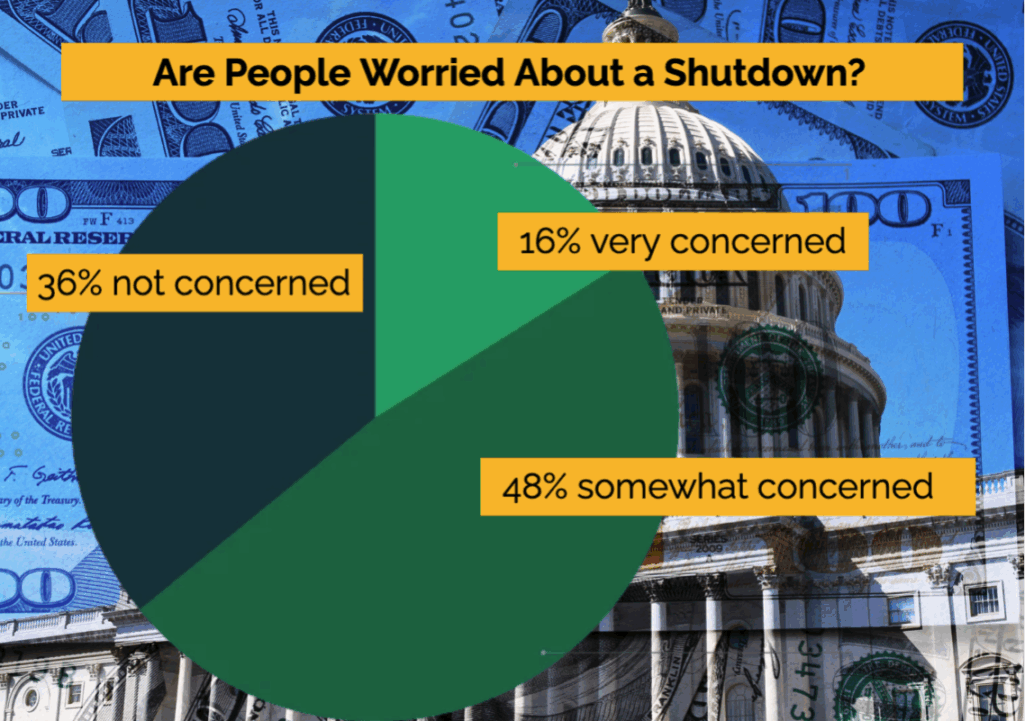
- 64% of survey respondents are concerned, with 16% being very concerned, and another 48% are somewhat concerned about how a shutdown could affect their personal finances. Thirty-six percent are not concerned.
This level of awareness shows that the shutdown debate isn’t just political background noise — people see it as something that could touch their daily lives. The high share of respondents expressing concern suggests retirees and near-retirees are bracing for financial ripple effects well beyond Washington.
Affordable Healthcare is Important to Older Americans Who Are Not Yet Eligible for Medicare
Seventy five percent of respondents said that affordable healthcare options are either critical (26%), important (32%) or somewhat important (17%) to them personally.
This finding underscores just how central healthcare costs are to retirement planning. For those retiring before age 65, subsidies can be the difference between leaving work with confidence or delaying retirement altogether. Without affordable coverage, even well-funded savings plans can be strained by premiums that rise faster than other living costs.
In fact, Losing subsidies will impact retirement plans
When asked how a loss of ACA subsidies (and the resulting 75%+ increase in premiums) would impact their retirement plans:
- 21% said it would cause a major impact — they’d have to delay or adjust retirement plans
- 37% said it would moderately affect their plans, forcing adjustments.
- 33% said subsidies would have little or no impact, but 20% of would be disappointed if they lost them
- 9% say that it isn’t applicable to them
It’s clear that even financially savvy Americans — people who are actively planning and thinking ahead — feel vulnerable to policy changes outside their control. For more than half, losing subsidies would force real adjustments or even delay retirement.
At the same time, the fact that more than 4 in 10 expect little or no impact or that it isn’t applicable underscores how uneven the retirement landscape is. Some households have the resources to weather higher costs, while others are far more dependent on subsidies to make early retirement feasible.
Broader Shutdown Concerns
Of course, healthcare isn’t the only worry. Seventy-six percent of respondents are worried about the wider financial impact of a government shutdown. Biggest concerns include:
- The impact on the stock market (20%)
- Overall economic uncertainty — jobs, growth, interest rates (51%)
- Government workers missing paychecks (5%) and other (4%)
Only 20% of respondents say that there is no major concern for them personally with a shutdown.
Financially savvy Americans are worried about markets, and economic uncertainty is especially pressing — volatility can shake investment portfolios, while questions about growth and interest rates affect everything from bond yields to mortgage costs. Even if government benefits keep flowing, uncertainty in Washington quickly translates into uncertainty in retirement plans.
The Role of a Retirement Plan in Feeling Prepared for Uncertainty
Finally, we asked how having a written retirement plan affects people’s outlook toward the uncertainty that comes with a government shutdown:
- 40% said yes, a plan makes me feel more confident.
- 25% said a plan makes them feel somewhat more confident and eases their concerns
- 10% said they still have concerns despite having a plan
- 12% say their concerns go beyond what is in their plan
- 13% are not worried about a shutdown
A plan builds preparedness by enabling a glimpse into the future
When we dug deeper, people told us the most helpful parts of their written retirement plan are:
- The ability to run “what-if” scenarios (28%)
- Being able to build flexibility into the plan (19%)
- Seeing the long-term picture rather than just today’s risks (26%)
- Knowing income sources and expenses are mapped out (17%)
- Feeling more control and less reactive (9%)
- Other (1%)
These findings highlight the real value of a written plan: it doesn’t eliminate uncertainty, but it gives people tools to face it with confidence. The ability to run scenarios, test spending flexibility, and see the long-term picture turns worry into action.
In moments of political or economic turbulence, having a plan helps retirees feel less reactive and more in control — exactly the kind of resilience that makes retirement security possible.
How Do Survey Results Differ for Those 64 and Under vs. 65 and Older?
We surveyed 509 people ages 64 and under, along with 107 respondents ages 65 and older. The comparison reveals both expected and surprising differences.
Older respondents were more aware of the looming shutdown but less concerned about its impact. Seventy-eight percent of those 65 and older said they were aware of the shutdown, compared to 70% of younger respondents. Yet only 38% of the older group expressed concern, versus 64% of those under 65.
When it comes to healthcare, the contrast was even sharper. Just 16% of the 65+ group said ACA subsidies were important to them, compared to 44% of younger respondents. That gap is expected — Medicare eligibility reduces dependence on ACA coverage — but it highlights how central affordable healthcare is for pre-retirees. Among younger participants, 37% reported actively managing their income to qualify for subsidies, compared to only 14% of today’s 65+ respondents who did so when they were younger.
Finally, a written retirement plan played a stronger role in easing concerns for younger participants. Sixty-five percent of those under 65 said their plan gave them confidence about handling a shutdown, compared to 51% of those 65 and older. Taken together, the findings show a clear divide: healthcare access and policy risk weigh heavily on Americans nearing retirement, while those already on Medicare feel more insulated. But across both groups, having a plan helps translate uncertainty into confidence.
Boldin’s Take
The risk of a government shutdown is a reminder of something bigger: uncertainty is part of life. You can’t control Congress or the markets. But you can control your own plan.
Whether ACA subsidies stay or go, whether markets wobble or rally, a well-built plan gives you the tools to adjust without panic. That’s why Boldin exists: to empower you to take control of your money and build confidence in your financial future — even when Washington can’t get its act together.
About Boldin
The Boldin Planner is powerful software that puts you in control. It’s almost like having a financial expert at your fingertips. Research shows that people with a written financial plan do 2.7 times better financially. They’re also 54% more likely to live comfortably in retirement. That’s not luck, that’s taking control of your money. The Boldin Planner has been named the Best Financial Planning Software of 2025, and the company was selected as a Top Innovator in UpLink’s Prospering in Longevity Challenge and named to the FinTech 100 by CBInsights.
And, doing it yourself doesn’t mean doing it alone. Beyond the Boldin Planner, we offer classes, coaching, and expert guidance from CFP® professionals through Boldin Advisors.
The post Survey: The Looming Government Shutdown and the Future of ACA Subsidies, Boldin Subscribers Express Concerns appeared first on Boldin.